

Choosing an online casino library is easier when you compare the games by format rather than by headline numbers. The betya catalogue is described as covering more than 5,000 titles from over 30 studios, including slots, table games, live dealers, instant games and jackpots. That range can be useful, but a large lobby is only helpful when you know how to narrow it down. The practical question is not which game is “best”; it is which format suits your preferred pace, decisions and level of information.
Start with the game format, not the title
Slots are usually the simplest place to begin browsing because each title presents a defined theme, pay structure and set of features. Video slots may use cascading reels, expanding symbols, free-spin rounds, Hold & Win mechanics or bonus-buy options. Classic slots tend to offer a more restrained layout, often with fewer reels and simpler rules. Progressive jackpot games add the possibility of a linked prize, although the size of a jackpot does not make a game more likely to produce a win.
Table games suit players who want familiar rules and more visible choices. Blackjack, roulette, baccarat and craps each create a different type of decision-making. Blackjack involves choices such as hitting, standing or doubling; roulette is based on selecting wagers before the wheel spins; baccarat generally has fewer player decisions; and craps uses several bet types with different conditions. Video poker sits between slots and tables because the outcome comes from cards, but the player normally chooses which cards to hold.
Other categories broaden the experience without necessarily making it more strategic. Bingo, keno and scratch cards are generally quick to understand, while crash and Mines-style games use short rounds and changing risk choices. Original instant or RNG-style titles can be convenient for brief sessions, but their simpler presentation should not be mistaken for better odds. Before opening a game, check its rules, displayed pay information and any available RTP details rather than choosing only from its name or artwork.
How do filters make a large lobby manageable?
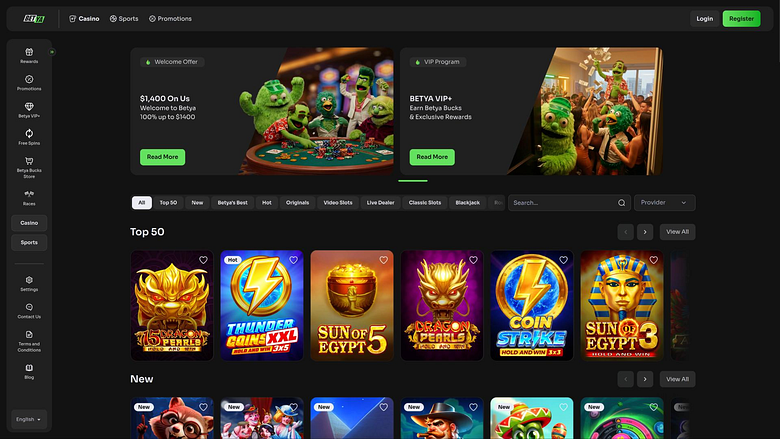
A catalogue with thousands of titles can create more friction than choice if every game appears in one long feed. Category filters are therefore more useful than scrolling. A practical first pass is to choose the broad format—such as Video Slots, Live Dealer, Blackjack, Roulette, Table Games or Jackpot—and then refine the selection using New, Top 50, Favorites or Recents. These labels help with navigation, but they do not establish that a game is more suitable or more profitable.
Use discovery sections for different purposes. “New” can help locate recent additions, while “Top 50” may show games that attract substantial attention. “Favorites” and “Recents” are practical for returning to familiar titles. A category such as “Betya’s Best” or “Hot” should be treated as a sorting label, not an independent assessment of value. If a lobby promotes a game prominently, read its rules and paytable before assuming the placement reflects quality, low volatility or a favourable return.
Filters become especially useful when comparing similar games. For example, a player interested in slots can separate classic titles from video slots, then inspect whether a selected game includes cascading reels, Hold & Win rounds or a bonus-buy feature. Someone looking for live play can move directly to real-time blackjack, roulette or baccarat instead of sorting through RNG titles. Where a demo mode is available, it can help explain controls and round flow; it cannot prove future results or verify that a short sample reflects the stated RTP.
When should you choose RNG, live dealer or instant games?
RNG games generate outcomes through software and usually allow faster, more flexible play. They include slots, video poker, digital table games and many original titles. Their main advantages are convenience and variety: rounds can be completed quickly, and a player can often move between themes without waiting for a table. The trade-off is that the presentation may provide less social interaction, and fast rounds can make a session feel shorter than it actually is.
Live-dealer games use streamed tables, dealers and on-screen controls. They may appeal to players who prefer a more structured pace, visible dealing and chat features. Live blackjack, roulette and baccarat are distinct from their RNG counterparts because the table presentation is real-time, but live presentation does not remove the house edge or turn the outcome into a skill contest. Table limits, available seats and stream quality may also affect the practical experience, so read the displayed conditions before joining.
Instant games are designed around short rounds and straightforward interactions. Crash, Mines, Diamonds, digital roulette, blackjack and baccarat are examples of formats that can be accessed without a long table session. Their speed is both an advantage and a limitation. A brief round may feel easy to control, yet repeated rounds can accumulate quickly. Decide in advance how long to browse and what session limit applies, then avoid treating a rapid format as a way to recover an earlier result.
What should you compare inside the same category?
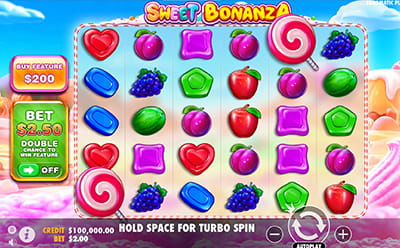
Comparing games within one category requires more than matching themes. For slots, review the displayed RTP, volatility information where provided, reel structure and feature rules. RTP is a long-run theoretical figure, not a forecast for one session. Volatility describes how frequently and unevenly a game may distribute results, but labels can vary between providers. A high advertised prize, bonus feature or familiar studio name does not replace reading the individual game information.
For table games, compare the rule set and available wager types. Blackjack versions can differ in the number of decks, dealer procedures, payout rules and optional side bets. Roulette may use different wheel formats, while baccarat tables can present distinct betting options and limits. Side bets often have separate mathematical conditions from the main wager. If a rule or payout is unclear, do not infer it from another version of the same game; open the help panel or consult the operator’s stated information.
For live and instant formats, inspect the practical conditions as carefully as the game type. Look for minimum and maximum stakes, round timing, game-specific instructions and whether a feature changes the amount at risk. Promotional contribution rules, if relevant to your decision, can vary by game group, so never assume that slots, blackjack, roulette and live tables are treated identically. For broader Canadian information about gambling and its potential effects, consult Canadian gambling-health information from the Centre for Addiction and Mental Health.
Build a shortlist before opening a real-money game
A short comparison process can prevent the lobby from dictating your session. First, select one format that matches your purpose: entertainment, learning rules, live interaction or a brief low-complexity game. Next, choose two or three titles rather than opening every suggested option. Read each title’s rules, paytable, RTP information and feature descriptions. If the information is incomplete, treat that uncertainty as a reason to keep looking rather than a reason to rely on assumptions.
Second, decide which trade-offs matter to you. A slot with many features may be more engaging but harder to understand at a glance. A classic table game may have fewer visual distractions but still include side bets that change the risk. A live table can provide atmosphere and a slower rhythm, while an instant game may be more convenient but easier to repeat rapidly. There is no universal ranking among these formats; the useful comparison is between the experience you want and the conditions shown for that specific title.
Finally, keep discovery separate from spending decisions. A demo can explain a game’s controls where offered, but it does not establish that real-money results will follow the same short-term pattern. Set a time and spending boundary before moving from browsing to play, and stop when either limit is reached. If you cannot identify the rules, RTP information, stake range or key feature conditions, leave that title out of the shortlist. More games do not necessarily create a better choice.
Frequently asked questions about casino game discovery
Which casino category is easiest for a new player to understand?
Classic slots, basic roulette and standard baccarat generally have straightforward core rules, although each title can add its own conditions or side bets. Read the paytable or help screen first. Ease of understanding does not indicate better odds, a lower house edge or a greater chance of winning.
Does a demo mode show whether a game is fair?
No. A demo can show how the controls, bonus rounds and paytable work, but a short demonstration cannot measure long-term RTP or predict real-money results. Use it as an orientation tool only, then review the game’s stated information before deciding whether it belongs on your shortlist.
Are live-dealer games better than RNG games?
Neither format is automatically better. Live games may offer streamed dealers, table atmosphere and a slower pace, while RNG games usually provide faster access and more variety. Compare the specific rules, stake range, side bets and session pace with your preferences instead of judging a category by its presentation.